
Cannabinoids and Liver Diseases: The Role of Endocannabinoids in Healing and Treatment
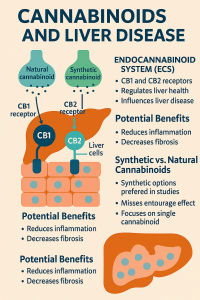 This blog explores the findings from a recent study, highlighting the potential benefits of cannabinoids in liver disease treatment and discussing the ongoing debate between synthetic and natural cannabinoids.
Understanding Cannabinoids and the Endocannabinoid System
Cannabinoids are compounds that interact with the body’s endocannabinoid system (ECS). The ECS plays a crucial role in regulating various physiological processes, including metabolism, immune responses, and even mood regulation. Cannabinoids exert their effects by binding to two main types of receptors; CB1 and CB2, located throughout the body, including the liver.
The liver is a central organ in metabolism, detoxification, and immune response, and recent studies have begun to explore the role of cannabinoids in liver diseases, including fibrosis and cirrhosis. The endocannabinoid system is involved in regulating the inflammatory responses and fibrosis progression in the liver. Research suggests that the CB1 receptor promotes inflammation and fibrosis, while CB2 has anti-inflammatory properties that can potentially protect the liver.
The Study’s Insights on Cannabinoids in Liver Disease Treatment
The study “Cannabinoids and the Endocannabinoid System in Liver Diseases” explains that both CB1 and CB2 receptors play significant roles in the pathophysiology of liver diseases. Cannabinoids, through their action on these receptors, can influence the progression of diseases like fatty liver, cirrhosis, and liver fibrosis.
While the study primarily focused on the molecular mechanisms, it also indicated that cannabinoids could have therapeutic potential, particularly for liver fibrosis, through their impact on immune cells and inflammatory pathways.
Synthetic cannabinoids, despite being engineered for specific targets, have repeatedly demonstrated significant risks and unpredictable side effects. The study highlights why safe, natural cannabinoids – not synthetic alternatives – must remain the focus of any therapeutic approach.
The Debate Between Natural and Synthetic Cannabinoids
The use of synthetic cannabinoids has been a controversial topic for years. While these man-made versions are often touted for their precision, they lack the full spectrum of compounds that natural cannabis provides. The entourage effect – the synergistic interaction of cannabinoids, terpenes, and flavonoids in cannabis – has long been considered essential in maximizing the therapeutic benefits of the plant.
Natural cannabis, with its array of compounds, has shown a broader range of benefits compared to synthetic cannabinoids. The idea that the combination of cannabinoids and terpenes works better together than in isolation is not just a theory, it’s backed by growing evidence. However, synthetic cannabinoids, like those that have been explored for obesity and other medical treatments, have sometimes proven to be dangerous.
For example, rimonabant, a synthetic CB1 receptor antagonist, was initially considered for weight management but was withdrawn after causing significant psychiatric side effects. This incident has raised questions about the safety of synthetic cannabinoids and their long-term use, especially when compared to the more holistic, natural alternatives provided by cannabis.
The Stigma Surrounding Psychoactive Cannabinoids
Cannabis has long been stigmatized due to its psychoactive properties, especially THC (tetrahydrocannabinol). However, just like any other medication, cannabinoids can be properly adjusted over time. Patients may experience a period of adjustment when starting cannabinoid-based treatments, just as they would with prescription medications that come with similar warnings (e.g., “do not drive until you are adjusted to this medication”).
The stigma attached to psychoactive cannabinoids often overlooks the well-being and relief they can provide, whether in the form of reducing anxiety, promoting relaxation, or easing chronic pain. It’s time to reconsider the negative perceptions about cannabis and recognize that THC and other cannabinoids can help promote well-being, not just euphoria.
Cannabis use, whether recreational or medicinal, often serves as a form of self-care. Many individuals utilize it to alleviate stress, enhance mood, or manage minor discomforts, much like one might use any other natural remedy. This suggests that, regardless of the intent; be it for wellness, prevention, or symptom relief, cannabis may function as a therapeutic agent. As Dr. David Younger notes, ‘All cannabis use could be considered medical, whether or not society accepts it.’ This perspective underscores the importance of recognizing the diverse ways in which individuals incorporate cannabis into their lives, not solely as a remedy for illness but as a tool for maintaining overall well-being.
The Promise of Natural Cannabinoids for Liver Health
The future of cannabinoid-based therapies for liver diseases lies in natural cannabis. Not only does it offer a broader range of compounds that can work synergistically, but it also carries fewer risks than synthetic alternatives, which are often designed for targeted effects without considering the holistic impact of the whole plant. The future of liver disease treatment lies in harnessing the therapeutic potential of natural cannabinoids, preserving the integrity of plant-based medicine without reliance on synthetic alternatives. While synthetic options may have specific therapeutic uses, they should not be seen as a complete replacement for the holistic, natural solutions cannabis offers. The entourage effect found in natural cannabis could hold the key to unlocking more effective, safer treatments for liver diseases and other chronic conditions.
Conclusion: The Future of Cannabinoids in Liver Disease Treatment
 The research explored in this blog highlights the significant potential cannabinoids have in treating liver diseases. However, it’s essential to approach the use of cannabinoids with careful consideration, particularly in terms of their psychoactive effects and the dangers posed by synthetic alternatives. The stigma surrounding cannabis use and legalization remains a barrier, but it’s time to challenge these misconceptions. With ongoing research and education, we can uncover the full therapeutic potential of natural cannabinoids in treating liver diseases and other chronic health conditions.

Revolutionary Research on the ECS, cannabinoids and cannabis-based medicine for healthcare from a trusted nonprofit.
