
CBD Enhances Immune Power of Equine Stem Cells in New Study
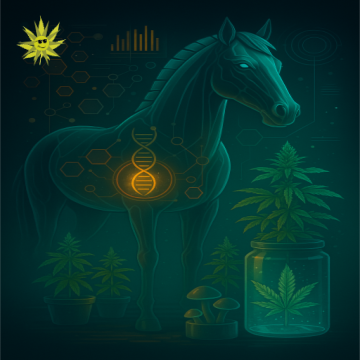 In a fresh twist on cannabinoid science, researchers have uncovered how cannabidiol (CBD) can modulate the immune function of equine mesenchymal stem cells (MSCs) while maintaining their health and regenerative capacity. This peer-reviewed 2025 study, published in the International Journal of Molecular Sciences, explored whether a CBD-rich cannabis extract could be used to prime horse-derived MSCs. As a result, the findings provide important insight for both veterinary and human regenerative medicine.
In this study, equine adipose-derived MSCs were exposed to low micromolar concentrations of CBD (5 µM and 7 µM) for 24 hours. Following priming, the stem cells retained their structural integrity and metabolic activity. At the same time, researchers observed changes in immune-related gene expression, particularly in cytokines that control inflammation and healing.
What CBD Did Right: Key Findings
-
✅ Increased IL-10 expression at 5 µM
IL-10 is one of the body’s key anti-inflammatory regulators. In CBD-primed MSCs, IL-10 expression increased significantly at 5 µM. As a result, these cells may be better suited for therapeutic use in conditions that involve chronic inflammation or immune imbalance. -
✅ Decreased IL-1β and IL-6 at 7 µM
IL-1β and IL-6 are major drivers of inflammation and immune overactivation. At 7 µM, CBD reduced the expression of both cytokines. Therefore, this dose may help push stem cells toward a more anti-inflammatory and regenerative profile. -
✅ Did not harm the cells
Despite these immune changes, CBD did not trigger apoptosis or senescence. It also did not interfere with cell metabolism or morphology. This shows that the extract was well tolerated at both doses and did not compromise the stem cells’ core functions. -
✅ Confirmed CB1 and CB2 receptor expression
Researchers confirmed that the equine MSCs naturally express CB1 and CB2 receptors. These are part of the endocannabinoid system, which is involved in regulating immune response, inflammation, and tissue repair. This suggests that stem cells are indeed responsive to cannabinoids like CBD.
Why This Study Matters
These findings point to a new role for CBD as a supportive agent in stem cell therapy. Not only did the extract modulate immune signals, but it also preserved the stem cells’ health and viability. Furthermore, because horses are often used as translational models, the results could apply to both animal and human medical settings.
In particular, the ability of CBD to enhance IL-10 while reducing IL-1β and IL-6 gives it a balanced immunoregulatory effect. This may be especially valuable in autoimmune or inflammatory conditions where the goal is to quiet harmful immune activity without shutting it down completely.
Although more work is needed to confirm the protein-level changes and real-world outcomes, this study offers a strong foundation. Future research may explore how CBD-primed MSCs perform in live animals or whether their secreted factors carry added therapeutic value.

Revolutionary Research on the ECS, cannabinoids and cannabis-based medicine for healthcare from a trusted nonprofit.
