
Alzheimer’s Study: Intranasal CBD and Gene Delivery Works
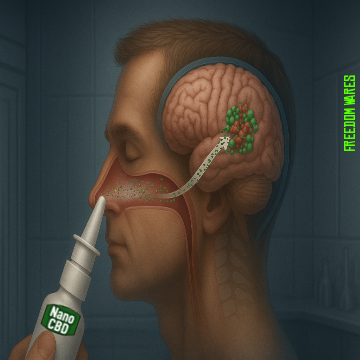 A new frontier in cannabinoid science is emerging, where plant-based medicine meets gene therapy. In a 2025 study, researchers demonstrated that cannabidiol (CBD), combined with a protective gene variant, could be delivered directly to the brain using a noninvasive intranasal system. The goal was to reduce inflammation and slow plaque buildup in Alzheimer’s disease. This delivery method, powered by engineered nanoparticles, opens up a powerful new path in neurodegenerative treatment strategies.
Alzheimer’s and the Need for Better Tools
Alzheimer’s disease is driven by the accumulation of amyloid beta (Aβ) plaques in the brain. These plaques trigger chronic inflammation, disrupt neuron function, and accelerate memory loss. Most current therapies offer limited benefits and come with significant side effects. This study took a different approach by targeting the biological roots of Alzheimer’s through a two-pronged system: one natural, one genetic.
-
CBD was chosen for its neuroprotective, antioxidant, and anti-inflammatory properties.
-
pApoE2, a plasmid encoding apolipoprotein E2, was selected because ApoE2 is known to bind and assist in the clearance of Aβ plaques more effectively than other variants.
Delivering these agents to the brain simultaneously, without using viral vectors or invasive methods, was the primary challenge. The solution came in the form of engineered PLGA nanoparticles.
Why These Nanoparticles Matter
Researchers designed mPEG-PLGA nanoparticles coated with chitosan and conjugated with mannose. These biodegradable carriers are:
-
Sized for brain uptake (around 179 nanometers)
-
Positively charged to enhance interaction with cellular membranes
-
Targeted via mannose, which binds to glucose transporters on brain endothelial cells
-
Coated for stability and protection, shielding the pApoE2 gene from enzymatic breakdown
This formulation allowed both CBD and pApoE2 to be codelivered through the nasal cavity, bypassing the digestive system, liver metabolism, and blood-brain barrier. It is a rare example of a successful dual payload system that works at the level of both chemistry and genetics.
Results Worth Watching
The CBD-loaded nanoparticles released their contents slowly over 30 days. In vitro, they significantly reduced inflammation in microglial cells exposed to lipopolysaccharide and Aβ, two key inflammatory triggers in Alzheimer’s.
Cytotoxicity tests confirmed that the delivery system was safe for brain endothelial cells. Importantly, pApoE2 was not only protected but also successfully transfected into primary astrocytes and neurons. Expression of ApoE2 increased significantly, with statistical results showing P < 0.0001, indicating a strong therapeutic signal.
In C57BL6/J mice, intranasal administration of these particles led to significantly elevated levels of ApoE2 in the brain. This points to real-world potential for reducing plaque buildup and calming inflammation where it starts.
Why This Approach Stands Out
Gene therapy is often invasive, expensive, and risky. Cannabinoid treatments, while promising, sometimes lack targeted delivery. This study bridged the gap with a nonviral, plant-based, gene-supportive platform that is safe, scalable, and grounded in biomaterials science.
The key takeaway is that precision delivery of cannabinoids and genetic regulators together can change how we manage complex neurodegenerative diseases. PLGA and mannose were not chosen at random; they were selected for their compatibility with brain pathways, minimal toxicity, and track record in smart drug delivery.
Freedom Wares Final Thought
Cannabis science continues to move beyond the expected. In this study, CBD did more than soothe; it worked alongside a genetic payload to target one of the toughest challenges in neurodegenerative medicine. By using intranasal nanocarriers, the researchers bypassed old limitations and showed what happens when natural medicine is given the right tools. No hype. Just science, delivery, and a real possibility of healing from within.

Revolutionary Research on the ECS, cannabinoids and cannabis-based medicine for healthcare from a trusted nonprofit.
