Becoming a Medical Cannabis User: What BC’s Low-Threshold Access Points Taught Us
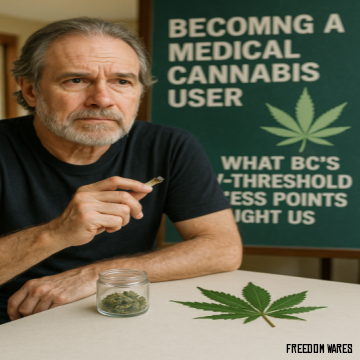 Before legalization swept across Canada, British Columbia stood out as a haven for grassroots compassion clubs and low-threshold access points (LTAPs) that helped thousands of people become confident, informed medical cannabis users. A new study by Marilou Gagnon and Heather Hobbs revisits this overlooked chapter of Canadian medical cannabis history and reveals why the process of “becoming” a medical cannabis user is far more social, nuanced, and fragile than legalization has acknowledged.
Beyond the Plant: The Social Learning Process
Using Howard Becker’s classic sociological framework on behavior and identity formation, the authors explored how people don’t just use cannabis medically; they become medical cannabis users. This identity is cultivated over time; through trial, guidance, and especially community. The researchers interviewed patients, staff, and founders of BC’s long-standing LTAPs, uncovering a pattern: real medical cannabis use happens at the intersection of three types of access; community, medicine, and space.
Community: Cannabis University in Disguise
Participants described their compassion clubs as informal schools where both staff and peers shared hard-won experience and advice. They weren’t just buying products; they were learning what strains worked for fibromyalgia, how to safely wean off opioids with edibles, or how to apply topicals effectively. For many, it was the first time their knowledge, symptoms, and dignity were taken seriously. One participant called it “the best university I could have attended.”
Medicine: It’s Not Just Access, It’s the Right Access
The legal system still treats all cannabis the same. But as the study points out, patients don’t need any cannabis; they need the right medicine, in the right form, dose, and price. LTAPs offered high-dose, full-spectrum, lab-tested, and compassionately priced products like RSO, suppositories, tinctures, and topicals; most of which vanished after legalization due to regulatory barriers. Access became retail, not therapeutic.
Space: The Power of a Place to Belong
Storefront access and on-site consumption spaces were more than conveniences. They were hubs of support and belonging. For people on disability or living with chronic illness, these spaces offered social connection and real-time education. Legalization replaced them with sterile stores focused on profit, not healing. Participants reported feeling alienated by budtenders with no medical training and no authority to offer advice.
What We’re Losing
Becoming a medical cannabis user isn’t just about finding a product; it’s about learning how to medicate, substitute, and engage with cannabis as a life-changing therapy. The study identified three learning pathways: 1) learning about medical cannabis, 2) learning how to medicate, and 3) learning how to substitute other medications with cannabis. All three require low-threshold access to community, medicine, and space. Remove any of these, and patients are left to fend for themselves.
Legalization Isn’t Liberation
This study challenges the myth that legalization solved access issues for patients. In fact, many reported worse access, fewer product options, and rising costs. The forced closure of LTAPs disrupted not only medicine access but the social ecosystems that helped people survive. Despite VCBC and a few others remaining, most patients lost what mattered most: a place to be seen, supported, and supplied.
Toward a Compassionate Future
The process of becoming a medical cannabis user is a journey; a communal, educational, and deeply personal one. If we want cannabis policy to truly support public health, it must reintegrate the lessons of LTAPs. That means restoring low-threshold access, protecting community-based dispensaries, and recognizing that cannabis is not just a substance but a system of care. Patients aren’t just buyers. They’re learners, leaders, and survivors.
The future of compassionate cannabis access lies not in retail chains, but in remembering who built this movement and defending what they taught us all.
Revolutionary Research on the ECS, cannabinoids and cannabis-based medicine for healthcare from a trusted nonprofit.
