
Bottom Cooling Boosts Cannabis Survival and Plant Quality
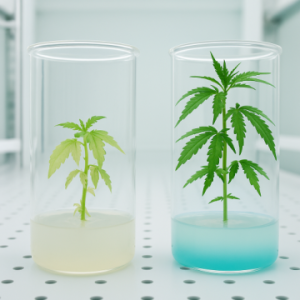 Even small changes can make a big difference when growing clean, healthy cannabis. A recent study found that using a cooling system under the plants during the early stages of lab growth can help prevent a common problem called hyperhydricity. This is when plant clones, or small cuttings grown into new plants, become swollen, fragile, and glassy looking because they take in too much water. It often leads to weak plants that don’t survive well.
In this study, scientists tested what happens when the bottom of the plant containers is kept about 2 degrees Celsius cooler. They used two types of cannabis plants that usually have problems with hyperhydricity. The results were clear: the plants with bottom cooling were much healthier, lived longer, and looked stronger than the ones grown without it.
The difference was huge. About 85% of the regular plants developed hyperhydricity, while only 10% of the bottom cooled plants had the issue. These healthier plants had stronger leaves, better control over moisture loss, and more chlorophyll, the green substance that helps plants absorb light and make their own energy through photosynthesis.
This study was done through a process called micropropagation, which is a lab technique that helps growers create many identical copies of a plant from a small piece of the original. It’s often used to preserve special strains or produce clean, disease free plants.
This research shows that simple, natural growing methods can make a big impact. It supports the idea that we don’t need harsh chemicals to grow better cannabis. For people who care about plant quality, clean cultivation, and natural medicine, this is a big step forward.
Stay tuned as we continue sharing studies that support healthy, high quality cannabis from the ground up.
Quick Glossary for New Readers
- Hyperhydricity
A plant condition where tissue becomes water soaked, swollen, and weak. Common in lab grown clones. - Plant Clone
A small cutting from a parent plant grown into a genetically identical new plant. - Chlorophyll
The green pigment in plants that helps them absorb sunlight and turn it into energy. - Micropropagation
A method used in labs to grow many copies of a plant from a tiny piece of the original. Great for clean, disease free growth. - Bottom Cooling
A technique that cools the base of plant containers slightly to improve health and reduce stress during early growth.

Revolutionary Research on the ECS, cannabinoids and cannabis-based medicine for healthcare from a trusted nonprofit.
