
Triple-Negative Breast Cancer: CBD Injection Shows Promise
CBD Depot Therapy: A Breakthrough in Triple-Negative Breast Cancer
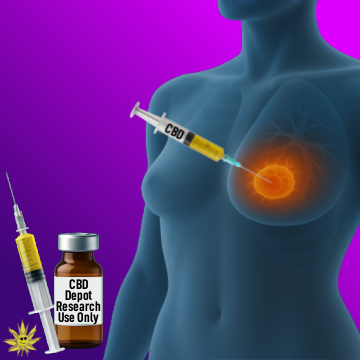 Triple-negative breast cancer (TNBC) remains one of the most difficult breast cancers to treat. Lacking estrogen, progesterone, and HER2 receptors, TNBC defies targeted therapies and leaves patients with chemotherapy as their primary; often harsh; option. But a 2025 study introduces a new hope: a cannabidiol (CBD)-loaded injectable depot that may reshape treatment possibilities.
A New Class of Cannabinoid Delivery
Published under PMID: 40349999, the study developed an in situ forming implant (ISFI) containing cannabidiol. When injected directly at the tumor site, this long-acting formulation released CBD steadily over two months. Researchers tested three versions with increasing CBD doses: 2.5, 5, and 10 mg. The 10 mg formulation (10-CB-ISFI) delivered the most consistent release and was chosen for further evaluation.
What is a CBD Depot?
A CBD depot refers to a specially formulated injection of cannabidiol (CBD) designed to release the compound slowly over time at the site of treatment. Unlike standard CBD products that require daily dosing, a CBD depot uses an in situ forming implant (ISFI) technology, meaning it forms a gel-like reservoir under the skin upon injection. This long-acting delivery allows for consistent, localized therapeutic effects over weeks or even months, reducing the need for repeated administration and enhancing patient convenience.
The results were nothing short of groundbreaking.
In both in-vitro and in-ovo models, including MDA-MB-231 and 4T1 TNBC cell lines, the CBD depot significantly inhibited cancer cell proliferation, blocked migration, and reduced angiogenesis (blood vessel formation), a key driver of tumor growth. On the chorioallantoic membrane (CAM) model, tumors exposed to a single 10-CB-ISFI dose shrank by nearly 60%, matching the impact of daily CBD dosing. Notably, this long-acting format performed better in halting angiogenesis than CBD in solution, showing up to 80% inhibition.
Challenging Chemotherapy’s Reign
Chemotherapy, while still standard in TNBC, is often debilitating and not always effective. The findings here position cannabinoid-based therapies not just as adjuncts, but as genuine competitors. A single administration of 10-CB-ISFI matched the tumor-suppressing power of continuous CBD treatment. That’s a revolution in convenience, patient compliance, and possibly efficacy.
Why This Matters
This work is more than just another CBD study. It signals the maturation of cannabinoid medicine into precision formats. The ISFI technology leverages the pharmacological benefits of cannabinoids while solving the delivery problem that has long limited their clinical potential. No psychotropic effects. No daily dosing. Just targeted, controlled, sustained release where it’s needed most.
A Future of Cannabinoid Oncology
The implications are wide. With further validation, this depot format could transform how we think about neoadjuvant cancer care—not only for TNBC, but for other tumors where local cannabinoid application might suppress progression. And while CBD is the focus here, the ISFI platform could eventually house full-spectrum extracts or other beneficial compounds from the cannabis plant.
As cannabis science continues to evolve, this study represents a bold step forward: one that offers hope to TNBC patients and challenges the pharmaceutical status quo with plant-based innovation rooted in rigorous science.
CBD didn’t just assist the treatment; it became the treatment.

Revolutionary Research on the ECS, cannabinoids and cannabis-based medicine for healthcare from a trusted nonprofit.
