Trichome Extraction for Cannabinoid Purity
Electrostatic Trichome Separation: A Clean Leap for Cannabis Extraction
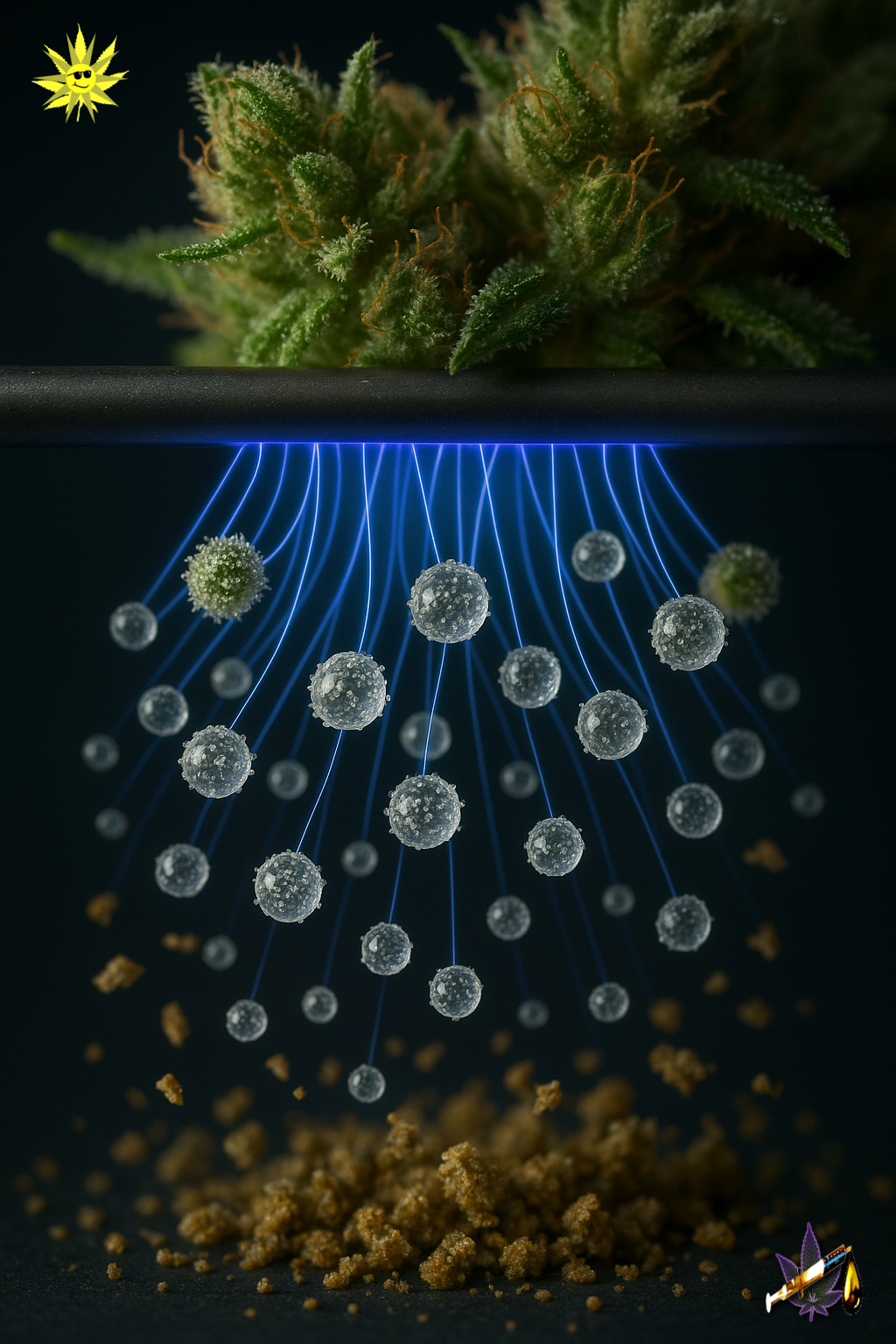 In the pursuit of cleaner, solvent-free cannabis concentrates, a quiet revolution is gaining ground: electrostatic trichome separation. While time-tested methods like dry sifting and ice-water hash have long supported the art of hashmaking, they often come with trade-offs; compromised purity, tedious labor, or environmental costs. A 2025 peer-reviewed study by MacGowan and Martynenko introduces a new path forward, one that relies on the unique electrical properties of cannabis trichomes to create a non-destructive, energy-efficient, and scalable extraction method.
Rethinking the Science of Separation
Trichomes, the resin-filled glands responsible for the plant’s aroma, flavor, and medicinal effects, naturally carry a negative charge. Meanwhile, the surrounding plant biomass holds a positive one. This simple but powerful difference is the key to electrostatic separation. When suspended in an electric field, trichomes are attracted to one electrode, while the unwanted biomass is drawn toward the opposite side.
This technique, long used in mineral and protein processing, is being applied to cannabis at scale for the first time, promising cleaner results and greater consistency.
Inside the Plasmastatic Separator
At the heart of this innovation is the Plasmastatic separator, a free-fall electrostatic system designed for precision. Particles are triboelectrically charged in a coiled pipeline and introduced into a separation chamber where dual electrodes sort them by charge. Trichomes, negatively charged, veer toward one side. Biomass, positively charged, shifts in the opposite direction.
The system can process from 1 to 100 kilograms per hour while consuming as little as 20 watts per 100 grams per minute. Components include a vibrating feeder, airflow regulator, and custom-designed collection bins, all of which support high-throughput and low-waste operations.
Purity, Potency, and Preservation
Lab results from the Plasmastatic system are impressive: up to 98 percent trichome recovery across multiple passes. First-pass separations yield trichome purities of 80 to 95 percent, which can be enhanced to 99.8 percent with recirculation.
Because this method avoids water, solvents, and intense mechanical friction, it preserves delicate compounds like terpenes and cannabinoids. That means better aroma, flavor, and therapeutic effects; all without degrading the plant’s natural profile.
Dry Sift, Ice Water, or Electrostatics?
Compared to traditional approaches:
- Dry sifting is labor-intensive and prone to inconsistent yields.
- Ice water extraction poses challenges around terpene retention, microbial contamination, and expensive dewatering steps.
- Electrostatic separation sidesteps those pitfalls, offering clean, scalable, and solventless results with minimal operator skill.
A Cleaner Way Forward
This technology isn’t just about better hash. It’s about reshaping cannabis extraction with environmental and medical integrity in mind. The system is:
- Non-destructive and gentle on trichomes
- Scalable for both small-batch and industrial operations
- Compatible with renewable energy setups, making it ideal for remote or off-grid facilities
Raising the Bar for Purity
Whether destined for medical use, cosmetics, or high-end concentrates, the trichomes produced through this method meet the highest standards. They offer greater consistency, traceability, and compliance in regulated markets; key ingredients for restoring trust in cannabis quality.
Veteran hashmaker Marcus Gary Richardson weighed in on the evolution of static tech, tracing its lineage back over 35 years to Skunkman Sam. While the method became more widespread thanks to contributions from community figures like Meze and D420k, Richardson highlighted a key limitation:
“Dry sifting cannabis is difficult to be efficient at… when you extract a farmer’s grade sift and get a 20% return, the head content can still be as low as 10% of that 20%.”
He emphasized that while cleanup can yield nearly pure glandular heads, it doesn’t improve the initial extraction yield.
“This is why we still prefer water extraction,” he noted, “as when I get a 20% return with water, it’s pure heads – 100% of the material is glandular trichome heads.”
His insights bring practical depth to the discussion, reminding us that methods must balance both purity and practicality. While dry sifting has its appeal, water extraction and now electrostatics offer more reliable paths to true trichome integrity.

Marcus “the Bubbleman” Richardson outside Bob Marley’s historic home in Kingston. A fitting backdrop for one of hashmaking’s most respected voices.
A Hashmaker’s View: Purity Begins at the First Pass
In a deeper follow-up conversation, Marcus shared a series of microscope images to explain the reality of dry sift yields and purity.
“With dry sifting you have two processes. You have a screen that you will do a farmer-grade extraction on. This will give you resin that looks like this under the microscope.”

First-pass dry sift with heavy contaminant. Resin glands are mixed with broken plant matter — typical of farmer-grade screen work before cleanup.
![Image 1: First-pass dry sift with visible contamination]
“You can see a lot of contaminant. Because with dry sifting there is no water to keep everything afloat, so everything falls.”
“It becomes counterintuitive. People think the harder they work the material over the screen, the more material they will get. The problem is the purity is gone. It’s maybe 10% heads if you’re lucky.”
“Now I can clean that with static to pure heads. But that is not going to help me with my shitty initial yield.

Static cleaning improves trichome purity, isolating more glandular heads — but can’t recover the quality lost in the original extraction.
Let’s say I got 20% yield from that top photo – that would mean the purity of heads is around 16% of my 20% yield is complete and total garbage. So the loss is in the initial extract.”

Bubble hash made from water extraction. Nearly all visible material is composed of intact, mature trichome heads; demonstrating superior initial purity.
Why Water Hash Wins on Purity
He then contrasted this with water extraction:
“When I run water hash and make bubble, 99% of the final product is glandular trichome heads. So if I get a 20% yield, it’s 20% pure heads. It’s night and day really. You can clean dry sift up as well as you can clean water hash up, but your initial yields are going to be night and day. Always a higher return and better purity with water extraction.”

Top-tier water hash. Nearly every visible structure is a fully intact trichome head — the definition of extraction purity.
“Remember it’s not quality. It’s purity. How pure is the hash of trichome heads.”
Closing Thought
Electrostatic trichome separation represents more than a new machine; it’s a clean leap forward in how we approach cannabis as medicine, industry, and culture. As the demand for purity and accountability grows, this technology positions itself at the forefront of a movement driven by both science and care.
The rise of electrostatic trichome separation owes more than a nod to the early innovators. Without the persistence of hashmakers like Marcus, Skunkman Sam, Meze, and D420k, this now-lab-tested method may have never emerged from the shadows of traditional technique. Their hands-on contributions helped shape what is now becoming a cleaner, scalable science.
Revolutionary Research on the ECS, cannabinoids and cannabis-based medicine for healthcare from a trusted nonprofit.