
Far-Red Light Boosts THC and Slashes Emissions in Medicinal Cannabis
Cannabis cultivation is undergoing a quiet revolution under a crimson hue. A 2025 study published in Scientific Reports by Tyson J. Peterswald and colleagues reveals how far-red (FR) light; the lesser-known sibling of red and blue in the photosynthetic spectrum; may offer a powerful tool for improving yield, THC content, and sustainability in medicinal cannabis.
A New Light on Growth
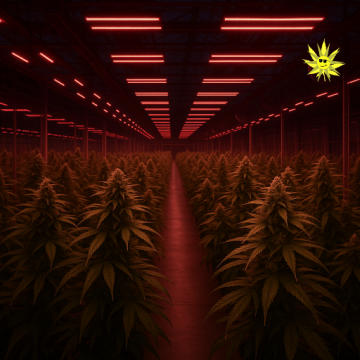 Far-red light triggers two major plant responses. First, it initiates the “shade avoidance” mechanism, prompting stem elongation and altered flowering when red-to-FR light ratios drop. Second, when combined with higher-frequency light like red or white, FR boosts photosynthetic efficiency via a well-documented process called the Emerson effect.
This dual-action effect is particularly compelling for indoor cannabis growers. The research team explored whether end-of-day (EOD) applications of FR light could replace full-spectrum hours in controlled grow environments, optimizing both plant performance and energy use.
Yielding Results with Less Light
The trial involved six lighting regimes across three popular cannabis genotypes: Cannatonic (high-CBD), Hindu Kush (high-THC), and Northern Lights (high-THC). The standout result came from the Northern Lights strain. By applying 2 hours of FR light after a 10-hour photoperiod (10L_2D), researchers increased total THC yield by nearly 70% over the traditional 12-hour lighting setup, while using 5.5% less energy.
In Hindu Kush, a 4-hour dose of FR light also elevated THC concentration. The implication? Genotype-specific lighting strategies could enhance cannabinoid output without extending the photoperiod.
Cannabinoid Complexity
FR light didn’t just impact yields; it reshaped the cannabinoid profiles. Northern Lights responded best to FR in darkness, producing significantly more Δ9-THC and THCA. In contrast, Cannatonic saw mixed results, with certain FR treatments repressing CBDA accumulation while still increasing CBDV and d9-THC levels.
These shifts underline the importance of tailored lighting based on cultivar genetics. For high-THC strains, carefully timed FR exposure can enhance both potency and economic return.
Biomass and Morphology
FR-treated plants showed increased height and vegetative biomass. Treatments with prolonged FR (like 10L_2_2D and 12L_2_2D) had the most pronounced effects, echoing natural light cycles at dusk. However, too much FR, especially in longer photoperiods, delayed flowering and reduced flower biomass; a cautionary note for overuse.
In Cannatonic and Hindu Kush, a 12L photoperiod with 4 hours of FR increased whole-plant biomass but not flower yield, suggesting that FR redistributes energy toward vegetative growth unless precisely managed.
Energy, Emissions, and Economics
Perhaps the most striking benefit of FR lighting is environmental. Replacing a standard 12-hour full-spectrum regime with a 10-hour + 2-hour FR schedule yielded similar or better results in key varieties while reducing energy use. For indoor growers, this could mean:
- Savings of 115 kWh per kg of dried flower
- $39/kg saved in electricity costs
- 91 kg CO2e fewer emissions per kg produced
In an industry scrutinized for its environmental impact, FR lighting offers a clear pathway toward greener operations without compromising product quality.
The Takeaway: Less Can Be More
This landmark study confirms that with precision and plant-specific knowledge, far-red light can do more than stretch stems; it can stretch the boundaries of what’s possible in cannabis cultivation. By mimicking dusk-like conditions and enhancing photosynthetic harmony, EOD FR treatments unlock a smarter, leaner path to high-THC, energy-efficient harvests.
The future of cannabis lighting might not be brighter; just redder.

Revolutionary Research on the ECS, cannabinoids and cannabis-based medicine for healthcare from a trusted nonprofit.
