

doi: 10.1097/NUR.0000000000000899.
Medical Cannabis: Breaking Through the Grass Ceiling for Inpatient Care and Use
- PMID: 40233231
- DOI: 10.1097/NUR.0000000000000899
Abstract
Purpose/objectives: Medical cannabis is often prohibited for inpatient use. This disallows patients from using a substance they find beneficial, when other treatments have failed, for symptom relief including pain, nausea, insomnia, and mood. We found no other facilities with medical cannabis policies. Our team amended the medical cannabis policy to align with California state laws to facilitate inpatient use. Project aims were to (1) align the policy with state guidelines, (2) update workflow including eligibility algorithm with lockbox, and (3) improve patients’ pain relief.
Description: A clinical nurse specialist spearheaded a cannabis interdisciplinary integration committee. A medical cannabis policy existed but did not meet recent legislative changes, prohibiting inpatient cannabis utilization. The committee revamped existing policy and created an eligibility algorithm, a medical administration record order, and a drug cross-referencing guide.
Outcome: Fifty patients were able to utilize cannabis during their inpatient stay over a 1-year period after medical cannabis policy implementation. Pain relief was the primary reason for cannabis usage, with 60% of surveyed patients reporting reducing opioids since starting cannabis.
Conclusion: Implementation of the revamped medical cannabis procedure to facilitate inpatient use was successful in implementation and patient outcomes. This can serve as a guiding framework for other institutions.
Keywords: Cannabis; Cannabis treatment; Marijuana uses; Medical marijuana; Medicinal cannabis.
Copyright © 2025 Wolters Kluwer Health, Inc. All rights reserved.
Medical Cannabis in Hospitals: A Practical Path Toward Compassionate Care
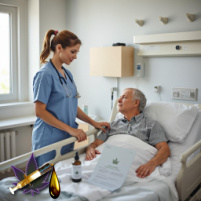 As the science around medical cannabis continues to evolve, access remains a persistent challenge, especially within hospital settings. Despite growing evidence supporting its benefits for symptoms like pain, nausea, insomnia, and anxiety, many healthcare institutions lack policies that allow patients to continue cannabis-based therapies during inpatient care.
A recent initiative from a California hospital demonstrates that change is not only possible, it’s essential.
Led by a clinical nurse specialist, an interdisciplinary team reviewed and modernized their outdated inpatient cannabis policy to comply with California state law. The team developed a comprehensive and safe framework for inpatient use, including an eligibility algorithm, secure storage (lockbox), and proper clinical documentation protocols.
The result? Over the course of one year, 50 patients were permitted to use medical cannabis during their hospital stays, with 60% reporting a reduction in opioid use as a direct outcome.
This case study serves as a compelling example of how hospitals can responsibly and ethically integrate cannabis into care plans. It reflects a growing recognition that patients deserve consistent access to effective, personalized symptom management; even while hospitalized.
For advocates and healthcare professionals alike, this work underscores the urgent need for policy reform; not only to protect patient autonomy but to improve clinical outcomes and reduce dependence on pharmaceuticals like opioids.
Access is care. Policy is compassion. Progress is possible.
The successful integration of cannabis into inpatient care can significantly improve patient outcomes, especially in managing pain. Research shows that 60% of patients who used cannabis during their inpatient stay reported reducing opioid usage, highlighting cannabis’ potential as a safer alternative to traditional pain management methods. This shift could play a pivotal role in addressing the ongoing opioid crisis, as patients explore alternatives to addictive painkillers. By implementing updated policies and offering patients access to medical cannabis, hospitals can provide a more holistic, effective approach to care.

Revolutionary Research on the ECS, cannabinoids and cannabis-based medicine for healthcare from a trusted nonprofit.
