
The Endocannabinoid System: Nature’s Guardian of Health
Unlocking Nature’s Healing Blueprint: Modulating the ECS Naturally
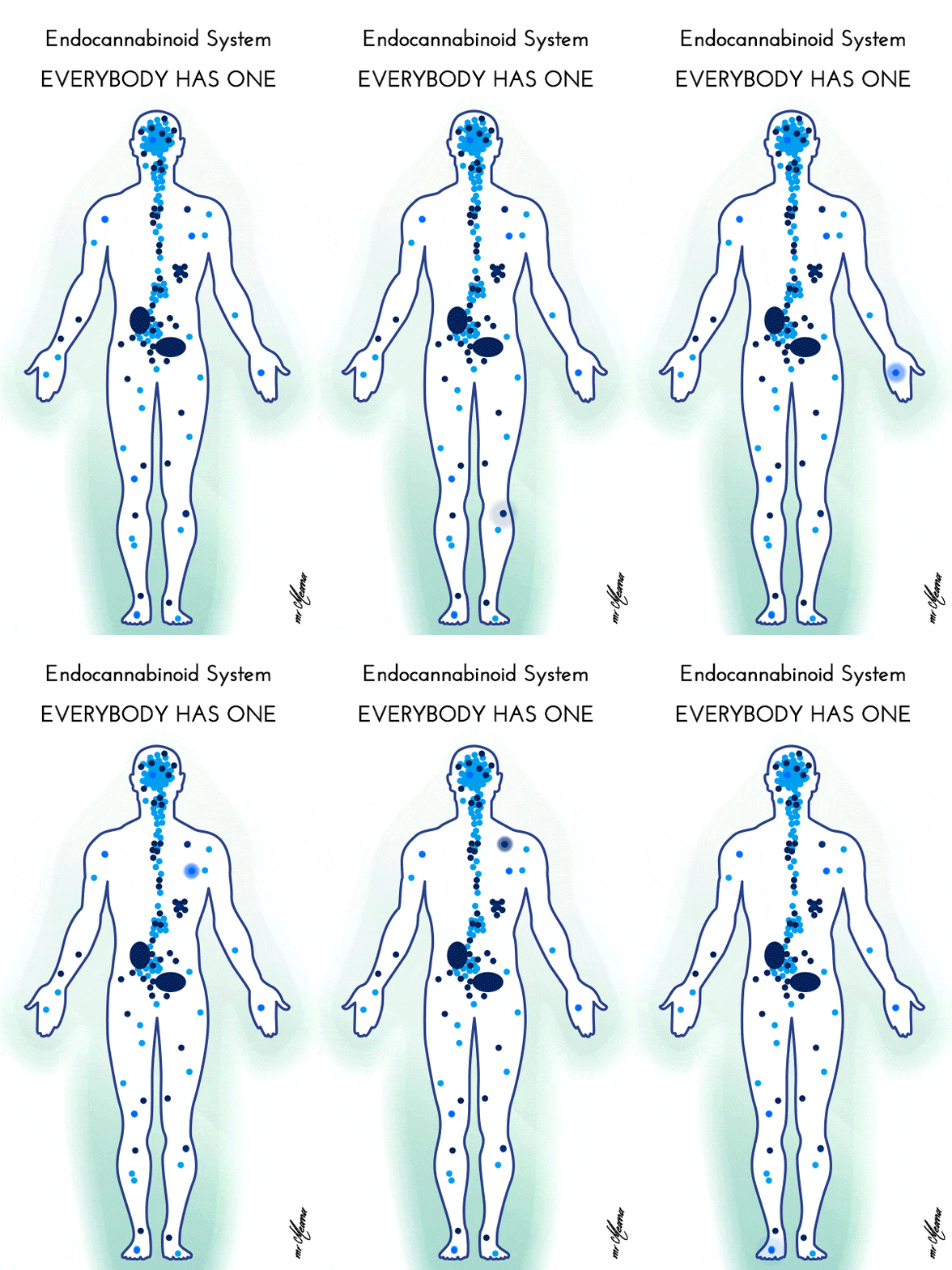 The human body operates as a symphony of systems working together to sustain balance, resilience, and life. Among these, the endocannabinoid system (ECS) stands out. This remarkable regulatory network influences nearly every physiological process, including mood, memory, immunity, metabolism, sleep, and pain perception.
Scientists discovered cannabinoid receptors (CB1 and CB2) in 1988. Shortly after, they identified endogenous cannabinoids such as anandamide and 2-AG. These discoveries revolutionized biomedical science. Today, experts often call the ECS the body’s “universal regulator,” working silently to maintain homeostasis, the internal stability essential for health. When the ECS functions optimally, vitality flourishes. However, when it falters, the disruption spreads across the body, contributing to a wide range of diseases.
“The discovery of the endocannabinoid system is the single most important scientific medical discovery ever and will save more lives than the discovery of sterile surgical technique.”
~ Dr. David Allen, Cardiologist and Medical Cannabis Researcher
To better understand the origins and significance of the ECS, watch the historic lecture by Professor Raphael Mechoulam, one of the pioneers who helped unlock nature’s blueprint for healing.
The Endocannabinoid System’s Role Across Diseases
Research confirms that endocannabinoid dysfunction appears across nearly every disease category. The following are major examples:
Neurological and psychiatric conditions:
Altered ECS signaling plays a role in epilepsy, multiple sclerosis, Parkinson’s disease, Alzheimer’s disease, schizophrenia, anxiety, and depression. Cannabinoids can regulate neurotransmitter release, reduce neuroinflammation, and protect neurons.
Autoimmune and inflammatory diseases:
Disruptions in ECS function are linked to rheumatoid arthritis, lupus, Crohn’s disease, and ulcerative colitis. The ECS modulates immune activity and inflammatory responses.
Chronic pain syndromes:
Conditions like fibromyalgia, migraine, and neuropathic pain show patterns of impaired ECS signaling. Traditional pain treatments often fall short, but cannabinoids offer an alternative.
Metabolic disorders:
Studies associate ECS imbalance with obesity, type 2 diabetes, and metabolic syndrome. Cannabinoid receptors regulate appetite, insulin sensitivity, and fat metabolism.
Cancer:
Emerging research suggests that cannabinoids influence tumor suppression, cancer cell death, and metastasis inhibition.
Skin disorders:
The ECS plays a role in psoriasis, eczema, and acne through its presence in skin cells and sebaceous glands.
Reproductive and hormonal conditions:
Research highlights ECS involvement in polycystic ovary syndrome (PCOS), endometriosis, and fertility regulation.
These broad impacts led scientists to propose the theory of Clinical Endocannabinoid Deficiency (CECD). Dr. Ethan Russo introduced this concept to explain why many chronic illnesses resist standard therapies.
“There is hardly any physiological system or disease state where endocannabinoids are not involved.”
~ Dr. Vincenzo Di Marzo, Endocannabinoid Research Pioneer
Learn more about Clinical Endocannabinoid Deficiency
Cannabis and the Restoration of Balance
When the body’s endocannabinoid production weakens, phytocannabinoids from cannabis provide natural reinforcement.
Cannabis is uniquely compatible with the ECS because its compounds, THC, CBD, CBG, and CBC, can mimic or modulate endogenous cannabinoids. Their benefits include:
-
Boosting anandamide and 2-AG levels
-
Restoring disrupted signaling pathways
-
Supporting balance across neurological, immune, metabolic, and endocrine systems
Unlike pharmaceuticals that often target a single pathway, cannabis works holistically. Furthermore, the entourage effect, the synergistic interaction of cannabinoids, terpenes, flavonoids, and other compounds, enhances therapeutic outcomes while minimizing side effects.
This botanical synergy amplifies healing potential, making cannabis a cornerstone of natural medicine.
Explore how the entourage effect works
A Future Rooted in Natural Medicine
 Maintaining a strong endocannabinoid system may be key to preventing, managing, and reversing chronic diseases. As research advances, cannabis emerges not just as a tool for symptom relief, but as a vital agent in restoring true physiological balance.
Cannabis medicine does not force the body; it works with the body’s innate healing systems. For those living with chronic inflammation, neurological disorders, or metabolic syndromes, cannabinoid supplementation offers renewed hope, empowerment, and a path to better health.
Nature created the blueprint. Cannabis reminds the body how to follow it.
The Silent System Few Are Taught
Despite its central role in regulating mood, pain, appetite, sleep, immunity, and more, the endocannabinoid system (ECS) remains unfamiliar to most people. Even many healthcare professionals have never been taught about it.
This is not just anecdotal. A 2017 study in Cannabis and Cannabinoid Research found that only 13 percent of U.S. medical schools included any instruction on the ECS. Most standard biology and anatomy textbooks still leave it out. In public health surveys, more than 90 percent of people in cannabis-legal regions say they have never heard of it.
This absence has consequences. When the body’s master regulator is ignored in education, public understanding suffers. So does the quality of patient care.
Awareness of the ECS is not just scientific progress. It is a vital step toward better health.
[Learn more about the Endocannabinoid System here]

Revolutionary Research on the ECS, cannabinoids and cannabis-based medicine for healthcare from a trusted nonprofit.
