
Understanding how environmental stress impacts the natural chemistry of Cannabis sativa is essential to protecting its true therapeutic potential. This study explores how water availability shapes cannabinoid and terpene profiles in CBD-dominant varieties, highlighting the need for responsible cultivation practices that preserve quality, sustainability, and patient trust.
Water Stress Effects on Biomass Allocation and Secondary Metabolism in CBD-Dominant Cannabis sativa L.
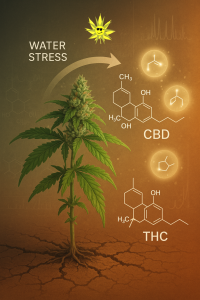 Water availability plays a critical role in shaping both the physical growth and medicinal quality of Cannabis sativa L.
In this study, researchers evaluated how water stress, applied during the vegetative and flowering stages, affected plant performance, cannabinoid concentrations, and terpene compositions in two Chemotype III (cannabidiol-dominant) varieties.
Plants were subjected to both moderate and severe water stress, and responses were measured through dry biomass analysis, GC-MS profiling, and multivariate statistics (PCA-MANOVA).
The findings revealed important insights into how cannabis responds to environmental pressures.
Impacts on Biomass and Yield
Water stress significantly influenced biomass allocation.
While total dry biomass actually increased under stress conditions, the harvest index (the ratio of harvested product to total biomass) decreased, particularly when stress occurred during the flowering stage.
This shift suggests that although the plants grew heavier, the valuable medicinal parts (flowers) suffered, affecting the practical yield important for cultivation and processing.
Changes in Cannabinoid Profiles
Water stress also had significant effects on cannabinoid content:
-
CBD concentrations declined with increasing levels of stress.
-
THC concentrations rose under vegetative-stage stress, indicating a stress-induced shift in cannabinoid biosynthesis.
-
CBN concentrations increased, suggesting enhanced THC degradation, possibly due to oxidative stress or prolonged exposure.
These shifts are critical for CBD-focused growers, as stress not only lowers desirable CBD levels but also risks non-compliant THC spikes, which can affect both legal status and medicinal quality.
Terpene Composition: Genotype Matters
While cannabinoid levels were sensitive to water stress, the overall terpene profile remained relatively stable, especially for the most abundant terpenes.
Terpene composition was primarily genotype-driven, meaning that the genetic background of the variety played a stronger role than environmental stress in determining aroma and flavor.
Only minor volatile compounds shifted under stress conditions.
This resilience in the aromatic profile is promising for maintaining product consistency even under less-than-ideal watering conditions.
Key Takeaways for Growers and Producers
This study highlights several important lessons for those cultivating CBD-dominant Cannabis sativa:
-
Optimized irrigation timing is crucial, especially during flowering stages, to protect harvestable yield and cannabinoid consistency.
-
Genetic selection remains key for maintaining terpene quality under variable environmental conditions.
-
Stress management practices are essential not only for maximizing yield but for preserving phytochemical integrity in medicinal cannabis production.
In high-value markets where chemical consistency is critical, water management strategies must be tailored carefully to support both plant health and end-product standards.
Final Thoughts
The delicate balance between growth, cannabinoid production, and environmental stress responses in Cannabis sativa reminds us of the importance of mindful cultivation.
Protecting the natural therapeutic gifts of the plant demands a commitment to sustainable practices, scientific understanding, and a deep respect for the conditions that shape cannabis into the medicine so many rely upon.
By honoring the needs of the plant, cultivators and patients alike benefit from a future where consistency, quality, and natural healing remain at the heart of cannabis care.

Revolutionary Research on the ECS, cannabinoids and cannabis-based medicine for healthcare from a trusted nonprofit.
